
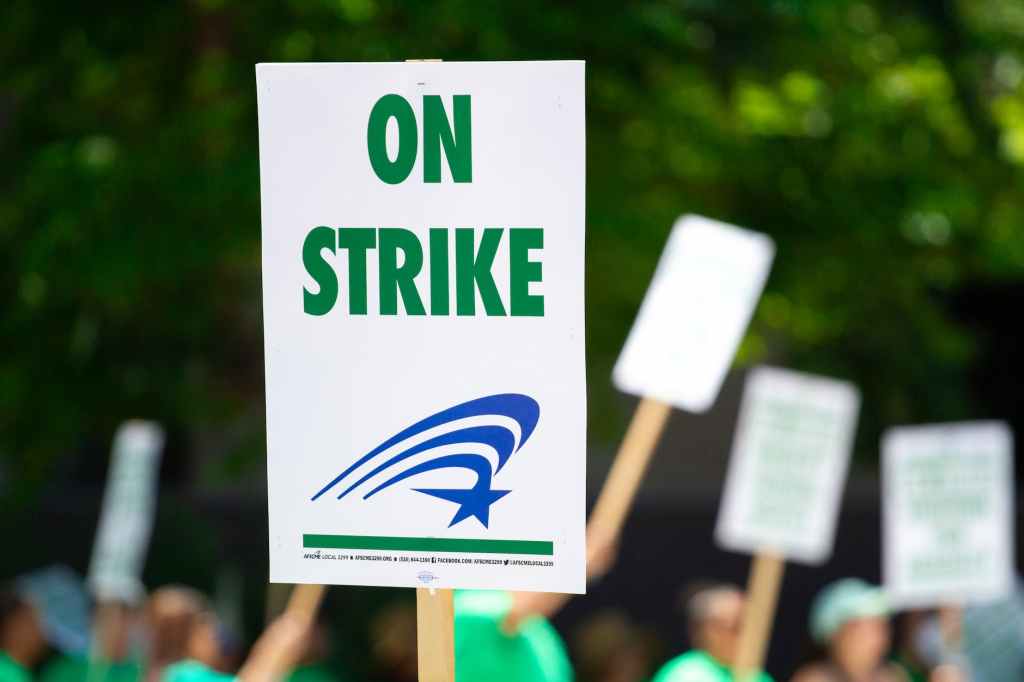
We’ve been here before. Looking back, approximately every ~20 years since the 1980’s, technology has shifted sufficiently to disrupt the entertainment industry and trigger a reaction from creators. In the 1980’s cable tv was the catalyst. In the early 00’s, they fought over DVD sales. Today, you probably know the challenge. I’ll give you one guess. Did you say streaming services? Of course you did.
Let’s talk about it.
How Did we Get Here?
From 2010 to 2022, the number of new, scripted television shows tripled. Streaming revenue has nearly doubled since 2019. As an outsider and a consumer, you might suppose this explosion of content would be a boon for writers. More shows means more jobs, right? Slow down. While the raw opportunities may have increased, the money invested in those opportunities has dwindled. Studios could once count on steady revenue from movie ticket sales, advertisements, and, most steadily, a cut of your satellite or cable bill, negotiated with the provider. The studios received this cut whether or not the subscriber watched a single minute of any of their shows. This was the classic pre-streaming problem for? Jill and Joe Consumer – we paid an arm and a leg for channels we didn’t want. On the other side of the screen, however, that high cable bill subsidized the income of all the directors, actors, writers and support staff the studio hired.
Enter streaming. Specifically, enter Netflix. With a functionally-infinite backlog of commercial-free entertainment at a low (but slowly climbing) price, subscribers cut cords by the millions. Sure, streaming giants were bleeding money paying for content, but investor’s didn’t mind. They had learned the Amazon Playbook – lose as much money as it takes for as long as it takes to own the market, then do whatever you want. Income-per-household declined. Fantastic news for us consumers! Anxious times for the Studios.

The incentives of the streaming era for top-level decision makers are diametrically opposed to those of the cable era. In the cable age, they wanted eyeballs to return weekly to view those 8 delicious minutes of advertising in exchange for 22 minutes of entertainment. Seasons were long, with 18 – 24 scripts per year hammered out by large writing teams. The creators of successful shows had leverage to demand higher pay from the studio, who needed the draw to compete with their rivals. In streaming, the only way to increase the bottom line is to Add. More. Subscribers. You’ve probably noticed the trend toward shorter seasons, fewer seasons, even as more and more new shows are released each year. One of the only enticements studios have to draw in new viewers is the lure of the new show everyone is talking about, but they can’t see, because it’s on a platform they don’t pay for. Each new show is another lottery ticket for the studio.
The Problem(s):
I’ve listened to hours of interviews from striking writers so you don’t have to! (But, if that’s your thing, check out the links below).
When contracts for writers are drawn up, their provisions are often quite narrow. If a contract says a writer is owed residual pay (royalties) for shows released to syndication on network television, that does not include streaming, or the studio’s own web site. Those are separate, and often meager, deals. I have heard several writers on very recognizable projects state that they cannot count on residuals to pay their bills between major jobs in the way that past generations of writers could. The way residuals for streaming content are calculated are often obscured and unknowable for writers, who cannot budget based on a pay structure they are intentionally prevented from understanding. Yesterday’s deals are not written to accommodate today’s (or future) technology.
With the increasing demand for new shows, the Studios are pressuring established writers to work longer, harder, and more independently, as they offer fewer opportunities to unproven writers. In the past, new shows were sold on a pilot script and an outline. This was likely started by an individual, but developed by a team once the studio showed interest. I have heard several interviews recently where writers describe so-called “mini-rooms.” Before receiving any guarantee from the studio, and often with little or no compensation, the writer is expected to hammer out an entire season, either solo, or with one or two collaborators. That is a lot of unpaid or barely-paid labor.
Once the show is picked up, writer’s rooms are smaller, and jobs are less defined. Experienced writers report struggling to get credit for functioning as a lead writer, much less as a show-runner, in the modern streaming rat-race.
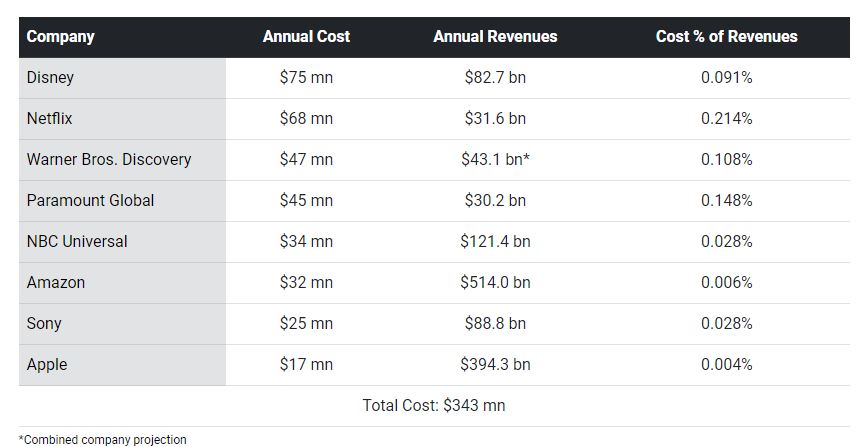
Lastly, there is the looming specter of artificial intelligence. I am far from an expert in the technology, but the capacity of these programs grows exponentially each year. A clever prompt fed to free, open-source artificial intelligence can generate ideas, script, high-quality images, and, increasingly, audio or video content. It is an equally exciting and terrifying time to live. We are on the brink of an economic disruption on par with the industrial revolution or the invention of the internet. Writers are right to be concerned that studios would love to replace human writers with virtually free idea-generation machines. It is my opinion that today’s AI, which specializes in producing the most likely answer based on how often words tend to be grouped together on a specific slice of the internet, cannot be used to produce a final draft… but it could easily replace the idea-generation phase (no more pitches? only corporate ideas searching for writers? *shudder*) or the junior writer. I predict an already-daunting career will become nearly impossible to enter as an unproven talent.
The Demands:
The Writer’s Guld of America wants a series of changes to guarantee their profession remains a viable way to earn a living wage, for now, and in the future. In layman’s terms:
- Pay more money up front as base salary to compensate for the decline in residuals.
- Keep writers on staff longer, rather than firing them as soon as production begins.
- Create industry standards for residuals and clearly define terms like “theatrical release” to fit the modern era (no more Scarlett Johansson-Black Widow problems).
- Stop using exploitative mini-rooms. Hire real writer’s rooms. Accept reasonable material up-front for pitches.
- Increase formalized compensation for variety shows and live TV.
- Increase residuals for new technologies, like streaming (“new” being an extremely relative term).
- Regulate the use of AI by major studios.
- Combat discrimination and harassment and promote pay equity.
Per the BLS, the median income for a screenwriter was $28/hour in 2013… when they’re working. That may sound ok, but it’s not taking into account 1) the inconsistencies and unpredictability of an increasingly volatile industry and 2) that most of them are living in California, a state with an extremely high cost-of-living. In that context, their demands seem pretty reasonable to me.
Resources:
“How Hollywood’s Writer’s Strike Could Change the Future of TV and Movies” | Plain English podcast by Derek Thompson | May 30, 2023
“The WGA Strike, Streaming Villains, and Bad AI Scripts w/Jen D’Angelo” | Even More News podcast by Cody Johnston and Katy Stoll | May 26, 2023
“Writer’s Strike – Ep. 103” | Intentionally Blank podcast by Brandon Sanderson and Dan Wells | May 24, 2023 (note: strike talk begins about halfway)
“What do Striking Hollywood Writers Want? A Look at Demands” | by The Associated Press | May 3, 2023
“2023 Pattern of Demands” | Writer’s Guild of America | March 7, 2023
“The Cost of Settling” | Writer’s Guild of America | May 16, 2023
 JC Murray Books