

What is consciousness? What is the subjective experience we call being a being? I’m no neurologist or philosopher, but in layman’s terms, I’ve heard and read the self discussed in two ways:
One, is that our bodies create the illusion of self by storing our experiences in long-term memory as patterns of electrochemical signals in our nerves, and then making educated guesses about the future. When we can learn from past experience and imagine future possibilities, we can prefer some futures to others. We might even want things. When we want, we can plan, and now you’re off to the races with a whole rich internal life. When you give a mouse a cookie, it wants to gather food, build shelter, and live a meaningful life. But these apparent thoughts, according to some scientists, are merely illusions created by physical processes. There is no separation between the mind and the body. You are a brain piloting a machine of muscle and bone.
Another outlook, is that our self is something beyond the physical body. This view, called dualism, holds that electricity and chemistry might explain how our bodies (including our brains) move and function, but they falls short of explaining how we are aware of any of it. If you believe in the soul or anything similar, congratulations, you are a dualist. Welcome to the club.
The fact is, scientists, don’t know what consciousness is. Read or listen to them long enough, and eventually they almost always describe life as an “emergent property.” That sounds fancy, doesn’t it? “Emergent property.” What does it mean? It just means that when lots of little explainable things come together, something big, surprising, and unexplainable happens. For example:
Life’s order is characterized by emergent phenomena. These I define as the spontaneous development of self-organized order among ensembles that can neither be predicted nor explained by examining component parts in isolation. Spontaneity and self-organization mean that no external agent is sculpting the organism: it sculpts itself. Ensembles mean that an emergent system is composed of many parts….Consciousness is the most striking (and difficult) example of an emergent phenomenon.
Peter T. Macklem, Emergent phenomena and the secrets of life, 01 JUN 2008, Journal of applied Physiology, vol 104 no 6, <https://doi.org/10.1152/japplphysiol.00942.2007>
Today, there is a renewed popular interest in what it means to be a conscious, aware self with the sudden boom in artificial intelligence. To be sure, nothing humans have created as of this writing approaches anything we would call ‘alive’, as incredible as large-language models may be, but we are closer than we have ever been. You can imagine the singularity just over the horizon, rather than resigning it to pure science fiction.
The Mountain in the Sea tackles the problem of consciousness head-on.
Let’s talk about it.
The Basics:
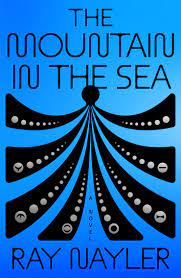
Title: The Mountain in the Sea
Author: Ray Nayler
Genre: Science Fiction, Mystery, Philosophy, Literature
Published: MCD Publishing, 2022
Spoiler-Free Summary:
With an extremely quick glance, TMITS reminds me a lot of a Michael Creighton novel (Jurassic Park, Congo, etc). A team of idealistic scientists fight evil mega-corporations and corrupt governments to protect a strange scientific mystery. Once you dive into these waters, however, you find them far deeper than you may have imagined.
The story follows three threads: First, we have our team of scientists, studying an unusually intelligent population of octopi. How intelligent and how they came to be this way is a major spoiler, read to find out. This main thread is rife with interesting discussions and surprising reveals. It is the core mystery of the novel, and, for my money, a fascinating one.
Second, one of the scientists is the worlds first and only true general artificial intelligence to pass the Turing Test (to convince any human tester that they are conscious). They are alive, both machine and person. Many people hate them, and would see them destroyed for the perceived threat they represent.
Finally, there is a traveling student kidnapped and enslaved to process fish on an Evil Megacorp AI-piloted fishing trawler. Their hopes and dreams are ground up by an uncaring world, reduced to one imperative: survive long enough to escape.
The way these seemingly disparate threads wrap around one another in the end is truly a thing of beauty.
Why You Will Love This Book:
If you love thinking deeply about abstract things and reading well-constructed discussions, viewing the concept from multiple angles, then log out right now and buy this book. Seriously. Each chapter begins with a relevant quote from one of two in-world books written by opposed characters, making the action feel like phases of a debate. It’s beautiful and thought-provoking.
However, it’s not a textbook. There is an exciting, twisty mystery among all that science, with a few sprinkles of thriller thrown in for flavor. Just when you think you know what’s going on, bam, you don’t.
The prose is languid, detailed, and weighty, like a wall-sized renaissance painting. Viewed (read) from 20 feet back, the composition is pleasing, but zooming in on the details is equally satisfied. This type of book isn’t for everyone (not enough action/romance/laughs, take your pick), but I thoroughly enjoyed the experience, and I bet some of you will as well.
Happy reading, folks.
Get Murray’s Bookshelf in your inbox whenever there’s an update.
Connect with us: Facebook: MurraysBookshelf
 JC Murray Books