

I’m such a nerd. I left highschool in the rearview mirror in 00’s, and (far too much) higher education in the 10’s, but over a decade later I still assign myself little research papers.
I recently grew curious about the origins of and differences between the fantasy words we use for “magic-user.” Some creators break with the dictionary paradigm by inventing their own words, which seem to fall into one of three categories: Those which describe…
- …what the power does (ex.: Jumper or Witcher).
- …how they obtained their powers (mutants, any variation of blessed/cursed/touched/chosen).
- Or, an option between these first two: (Avatar’s benders). ”
- …the feeling of the magic, like the spooks from Seventh Son or the grimm from… well, Grimm.
Some authors make up works altogether, like the grisha from Shadow and Bone. (Rumor has it, “grisha” were inspired by the Russian word for “watchful.”) Honestly, I’m all for any and all of these options. I love inventive, flavorful ways to describe mages and magic.
I’ve grown about the historical terms for magic users we see in secondary worlds time and time again. The more inclusive (or, cynically, more generic) the setting, the more likely we are to see multiple mage-words in the same setting. In video games or tabletop RPGs, different labels often signals different game mechanics. Any veteran dice goblin will tell you that playing a wizard is nothing like playing a sorcerer… and don’t get them started on warlocks. But, if a book chooses one real-life word, that may be an intentional choice. Perhaps it is designed to invoke a certain culture or setting. Perhaps it hints at a distinct source or application of magic.
For my money, I believe choices in writing are best when they are intentional. Maybe you’re a writer, and you’re debating what to call your historical fantasy magic-users. What is the difference between a witch and a wizard? A shaman and a sorcerer? Let’s check it out.
Witch (or Warlock)
The modern “witch” comes from the Old English “wicce”, which has roots in the words “wigle“, which means “divination”, and wih, which means ”idol”. These likely migrated to the isles from the Old German word “wikkjaz”, which referred to a necromancer; a literal “waker of the dead”.
Of all the terms researched for this post, only “witch” is inherently gendered. From the beginning, it referred exclusively to a woman with magical powers, so much so that if Old Britons needed to discuss to a male magician, they called them a “he-witch.” After a couple of centuries, people grew tired of this and invented the term “warlock,” which, interestingly, rose from a phrase which meant “oath-breaker.”
No reader familiar with the history of the witch trials, which exploded across Europe and America from the 1500s to the 1700s, will be surprised to learn that until modern times, “witch” and “warlock” had decidedly negative connotations. Witches were believed to have gained their supernatural power from pacts with the literal devil, therefore could not be trusted.
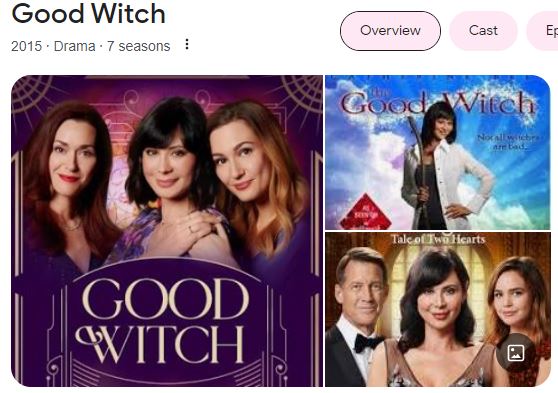
In a trend which really began with Glinda the Good Witch in The Wizard of Oz, modern programs like Charmed, Practical Magic, The Good Witch, and 1,001 cozy cottage-witch romances have reclaimed the witch as a symbol of modern feminine power. Witches are independent, misunderstood (especially by men), and are inherently powerful. I’m not going to follow that rabbit trail too deeply here, but this video on the topic by booktuber The Book Leo is excellent.
The historical negative attitude toward witches could not have been more different from the cultural feeling granted to our next magic-user, also from Britain:
Wizard
“Wizard” means “wise man,” pulling from an Old English phrase which meant “to know the future.” In the beginning, it did not necessarily signify a spellcaster; just a well-learned person. In a pre-science culture, however, the type of knowledge which marked a person as unusually wise veered toward magic. With time, mere insight grew into foresight, and by the mid 1500s, English dictionaries first defined wizards as those “with magical power, proficient in occult science.”
As a quick aside, this reminds me of my experience reading a very early translation of King Arthur. I was surprised and disappointed to see the wizard Merlin perform almost no magic whatsoever. Instead, he functioned as a plot device: Every story began with a speech from Merlin, foreshadowing the plot. Then, after the plot happened exactly as he said it would, it ended with the wizard saying “I told you so.” No doubt, this was a useful tool for an oral storytelling tradition, but I’m glad modern retellings have given Merlin a bit more umph.
I promise, we’re almost done with the British Isles, but we cannot discuss magic users without the…

Druid
Druids were celtic priests of Gaul, Britain, and Ireland before the arrival of Romans and Christianity. “Druid” is, in my opinion, one of the coolest and most flavorful names, from the Old Celtic “deru” (tree, or oak) and “wid” (to know). So, the druids are those who “know the oak.” With a name like that, it’s no wonder most modern fantasies with druids place them close to nature. Not originally thought of as magicians, druids were teachers and civic leaders, which, in their culture, included functioning as a prophet, consulting natural signs and portents to understand the will of their gods.
Let’s hop across the English Channel to our next magic user, the…
Sorcerer
“Sorcerer” comes from French and Spanish, with roots ultimately in the Latin “sortarius”, or fortune-teller. Of everything we have seen so far, this is the most pure spellcasting definition: “conjurer of spirits, one who uses magic arts in divination.” Not much to elaborate on there, although the connotation of a spirit-talker is a fun bit of flavor. If you’re basing your story in southern Europe, perhaps swap the very British “wizard” for the more continental “sorcerer“. Speaking of Latin, let’s talk about the…
Cleric
Because of their association with the modern church, and because miracles usually involve physical healing, every cleric in game or story seems to be a healer and a support class. The word comes from the latin “clericus,” or “clergy,” which is pretty straightforward. Where things get interesting is when we walk one step back to the Greek predecessor, “klerikos” meaning “pertaining to an inheritance.” In real life, clerics both receive and guard their congregation as an inheritance from the divine. In fantasy, clerics with magical power almost invariably receive it as an inheritance from their faith. Interestingly, warlocks and clerics both get their magic from an otherworldly power, but the connotations each carries could not be further apart. Sources matter, folks. Cue the Scarlet Witch quote.

Oh, and I don’t want to get to repetitive with a whole second section about priests, but I found this little nugget interesting: “Priest” comes from the Latin “presbyte”, which comes from the Greek “presbyteros,” both of which just mean “elder” or “old.” Shades of wizard, there.
Speaking of wisdom, how about the…
Mage
I did not originally intend to organize this article by moving East across the map, but here we are trekking from Greece into ancient Persia (eventually). Ready for the etymology train? “mage” comes from the Latin “magus” (“magician” or “enchanter“), which derives from the Greek “magos”, which was their word for the Persian priestly caste called the “magi”, which in addition to being all-around scholars, were sometimes said to be “magush”, or “magicians“.
Similar to sorcerer, the meaning here is pretty straightforward: “one who does magic”. I may have subconsciously clocked mage as the baseline magic-user from context as an avid fantasy reader. It’s the term I usually prefer when I want to discuss magicians without sounding like I’m describing the entertainment at a children’s party but also want to avoid referencing any particular culture or franchise.
Marching ever eastward…
Shaman
By my count, this makes our third (or fourth, if you count the magi) religious class which becomes a magic-user when transported to another culture. Take a little faith and ceremony and filter it through a foggy multi-cultural lens, and boom, you’ve got yourself a mage. Every variation below means “Buddhist monk” or “Buddhist Ascetic.”
If you thought the Mage train was long, hang onto your hat:
The modern English “shaman” means “priest of the Ural-Altaic peoples of northern Asia,” from German “schamane”, from Russian “sha’man”, from Tungus “saman”. Now we’re getting into debated scholarship, but according to some sources, the chain continues from Chinese “sha men” (“Buddhist monk”) from Prakrit “samaya”, and finally from Sanskrit “sramana-s.” My deepest apologies to any real scholars out there who may be weeping at this gross oversimplification.
If you’re a western reader like me and are also curious:
Tungusic peoples are from Eastern Siberia and Manchuria, and the Prakrit civilization was based in Modern-day India from 300 BC to about 800 AD. Sanskrit is a dead language, not a culture, also from India.

Voodoo
Like Druids, Shaman, and Magi, the concept of voodoo practitioner as magician comes from one culture looking at another’s religion, finding practices they don’t understand, and calling it magic. You are probably familiar with the archetype of the Caribbean witch or witch-doctor.
This is the newest term for a magician in this list. It has been officially documented in English only since about 1880, although “voodoo” and similar-sounding terms existed for probably the previous century. We all know about the sad and terrible history of the slave trade, so we won’t rehash that too extensively in this space, but it is essential context to this word. Europeans did not care which part of Africa their slaves came from, so first-generation kidnapped Africans working side-by-side were likely to speak different languages. Over time, these languages melted down and blended with local Caribbean dialects, French, Spanish, and English. “Voodoo” arises from this cultural alchemy.
The English word comes from the French “voudou,” which comes from the West African Ewe term “vodu” which meant “spirit, demon, or deity.” (As a quick aside, this conflation of what Westerners consider three separate classes of supernatural beings into one entity reminds me of the Japanese “kami”, which many dubbed anime translate “god,” but could just as easily mean “spirit.”). This is said to relate to the god Vandoo, a snake-like deity from the West African empire of Dahomey (1600s – 1904), whose name may have related to “vo,” their word for “fear” or “harm.”
Bruja
Last but far from least, the South-and-Central American mage takes perhaps the most globe-trotting journey of them all (thanks, colonialism). The modern Spanish “bruja” comes from the Catalan word “bruixa,” which has debated origins from, of all places, the British Isles. The Old Spanish may have arisen from an Old proto-celtic word “brixta,” which meant “spell” or “magic,” or, possibly, “bricht,” for “charm.” Alternatively, the root word may be the Breton word for magic, “brith.” Taken literally, it seems to me that the Iberians just took a word for “spell” and called their magicians… a “spell-er.” I suppose similar English titles include “caster,” “conjurer,” or “invoker,” etc.
Conclusion
So, what’s the point of this exercise?
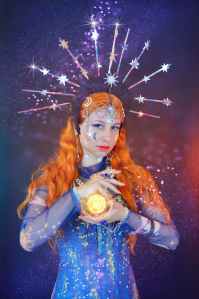
This one goes out to all my fellow storytellers – the writers, the gamemasters, the daydreamers. If you’re crafting your own setting with mages built-in, you should be intentional about how you label your magic-users. As these real-life examples illustrate, the way a culture names its mages tells a lot about how they feel about them. So much story packed into a single word! How did they get their power? What do they do with it? Should they be feared, or revered?
I hope this post gets your worldbuilding wheels turning.
Happy writing, folks. We’ll be back with more book reviews next week.
Sources: Most of the research for this article came from https://www.etymonline.com/
_____________________________________

Get Murray’s Bookshelf in your inbox whenever there’s a new post.
Connect with us: Facebook: MurraysBookshelf
 JC Murray Books